抑扶
Support & Restraint Method
Method
- Strength-based
- Most common
- First judgment
In brief
Restrain the strong, support the weak — the most basic method of setting the Useful God.
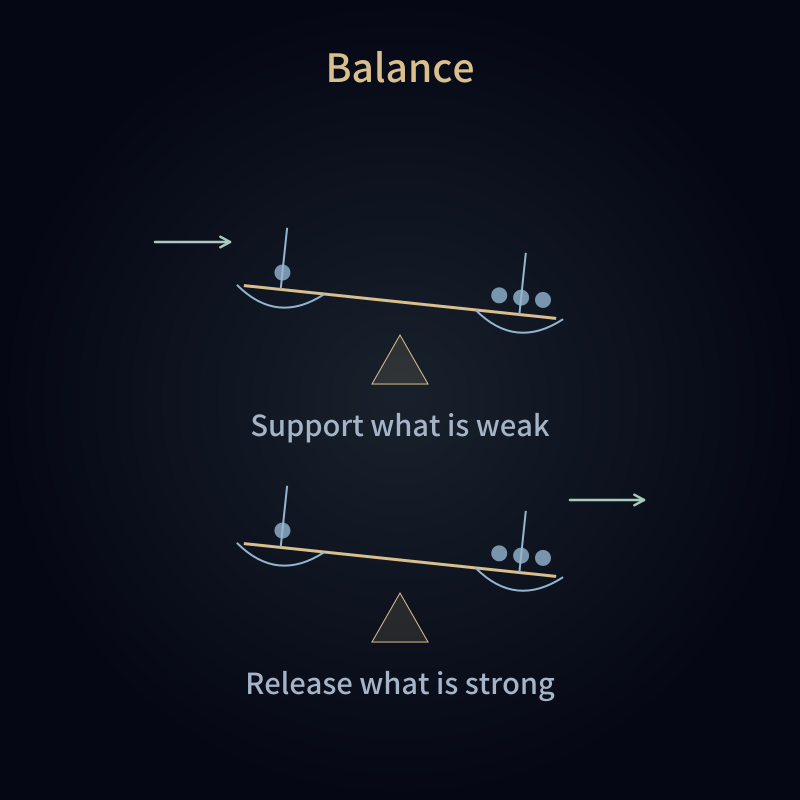
A conceptual illustration of traditional Bazi, not a personal useful element, score or measured element ratio. The useful element is not simply the least abundant element.
What is the Support & Restraint Method?
Support-Restraint (抑扶) is the most common way to set the Useful God, based on the Day Master's strength. For a strong chart it takes the draining Output, Wealth, or Officer; for a weak chart it takes the reinforcing Companion or Resource. Most charts use this as the first standard, and in the middling balanced zone, Climatic Balance and Mediation lead alongside it.
How to read it
When strength alone doesn't resolve it, weigh Climatic Balance, Mediation, and Illness-Cure too — the Useful God is not the verdict of one viewpoint.
Frequently asked
- What is the Support & Restraint Method (抑扶) in Bazi?
- Restrain the strong, support the weak — the most basic method of setting the Useful God. Support-Restraint (抑扶) is the most common way to set the Useful God, based on the Day Master's strength. For a strong chart it takes the draining Output, Wealth, or Officer; for a weak chart it takes the reinforcing Companion or Resource. Most charts use this as the first standard, and in the middling balanced zone, Climatic Balance and Mediation lead alongside it.
- Why does the Support & Restraint Method matter in a reading?
- Key points: Strength-based, Most common, First judgment. When strength alone doesn't resolve it, weigh Climatic Balance, Mediation, and Illness-Cure too — the Useful God is not the verdict of one viewpoint.
Related concepts
See your Day Master’s strength and Useful God — from your birth date and time.
Read my Bazi chart →