上停
Upper Court (Shang Ting)
Governs: Early years, learning, and ideals
- Early-years fortune
- Learning and wisdom
- Ideals
At a glance
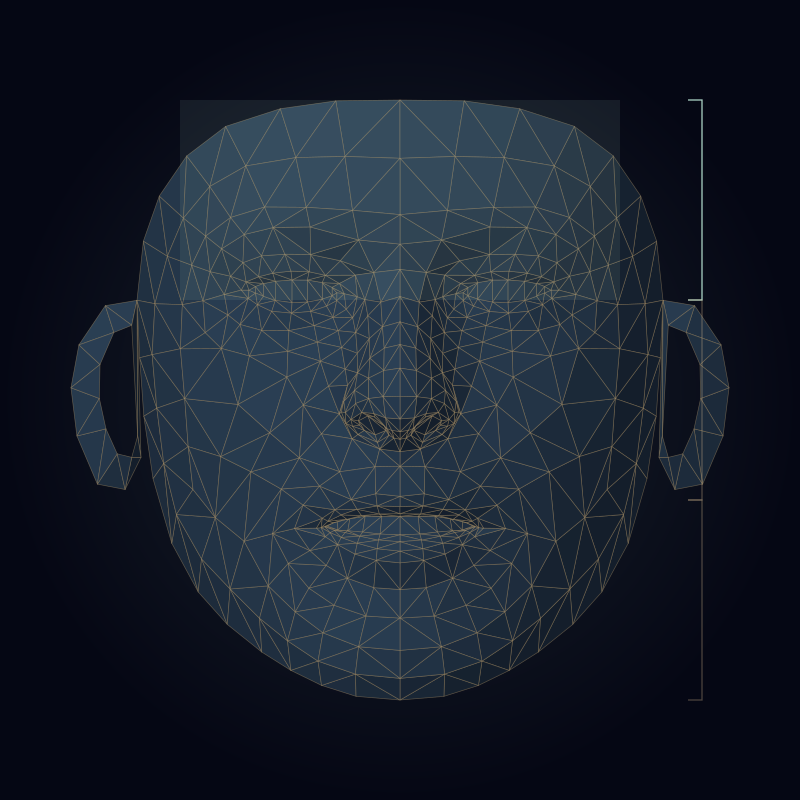
The forehead zone — reading the fortune of early years and one's learning, ideals, and wisdom.
What is Upper Court (Shang Ting)?
The Upper Court runs from the hairline to the brows and is read for the fortune of one's early years (roughly 15–30) together with intellectual capacity and the fortune of one's parents. A forehead broad, rounded, and clear is read as a sign of a bright mind, early distinction, and high ideals. A narrow or blemished forehead is read as the grain of making up for early hardship through effort. When the Upper Court stands out among the three courts, the person is read as one whose thought and ideals lead the way.
Frequently asked
- What does Upper Court (Shang Ting) mean in face reading?
- The forehead zone — reading the fortune of early years and one's learning, ideals, and wisdom. The Upper Court runs from the hairline to the brows and is read for the fortune of one's early years (roughly 15–30) together with intellectual capacity and the fortune of one's parents. A forehead broad, rounded, and clear is read as a sign of a bright mind, early distinction, and high ideals. A narrow or blemished forehead is read as the grain of making up for early hardship through effort. When the Upper Court stands out among the three courts, the person is read as one whose thought and ideals lead the way.
- What does Upper Court (Shang Ting) govern?
- It is read for Early years, learning, and ideals — its grain being Early-years fortune · Learning and wisdom · Ideals.
- Is face reading fixed fate?
- Face reading is not fixed fate but a reading of temperament and tendency. It makes no judgment of looks and no medical or psychological diagnosis.
More in this group
See how Upper Court (Shang Ting) reads on your own face.
Read my face →Face reading is a traditional reading of temperament, for reference only — not a medical, psychological, or looks assessment. Source: Standard physiognomy (觀相學 / Mian Xiang) interpretation.