Environment typology
Environment Typology 環
Four grains left by the world you grew up in — greenhouse · citadel · furnace · drift
In short
Environment typology reads the world you grew up in along two axes — a material axis (ample ↔ lean) and an emotional axis (expressive warmth ↔ measured reserve). The backbone of the result is the continuous coordinate of those two axes; greenhouse, citadel, furnace and drift are nicknames pinned on top of it, and when both axes sit near the middle the reading is a ‘balanced grain’ belonging to no corner. It is not a classification for judging people but a mirror for where today’s strengths and wounds came from. Among the threads by which one person is read, this is the ground — the environment thread.
Two axes — material and emotional
Environment typology reads childhood along two axes. The material axis gauges whether things were financially and spatially ample or lean; the emotional axis gauges whether affection was shown openly (expressive) or held with restraint (reserved). Neither side is ‘good’ or ‘bad’ — a person’s grain is set where the two axes meet.
The four types
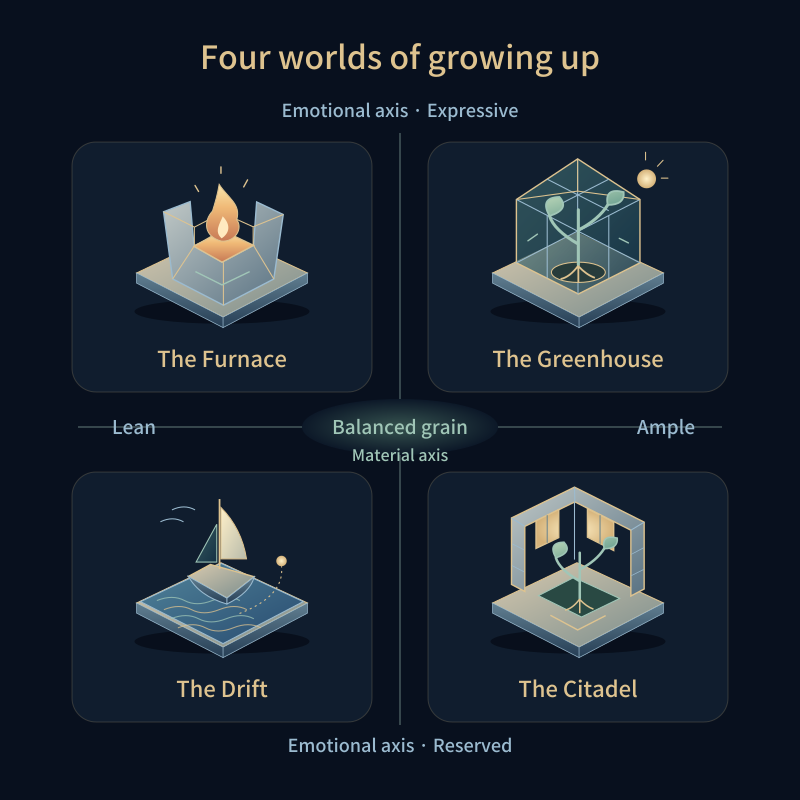
The quadrants of the two axes make four types. The five-element images (wood, metal, fire, water) are not a Four Pillars calculation but a literary lens laid over each corner — the fifth, earth, has no seat in this grid, so the centre, where both axes sit in the middle, is read separately as a ‘balanced grain’.
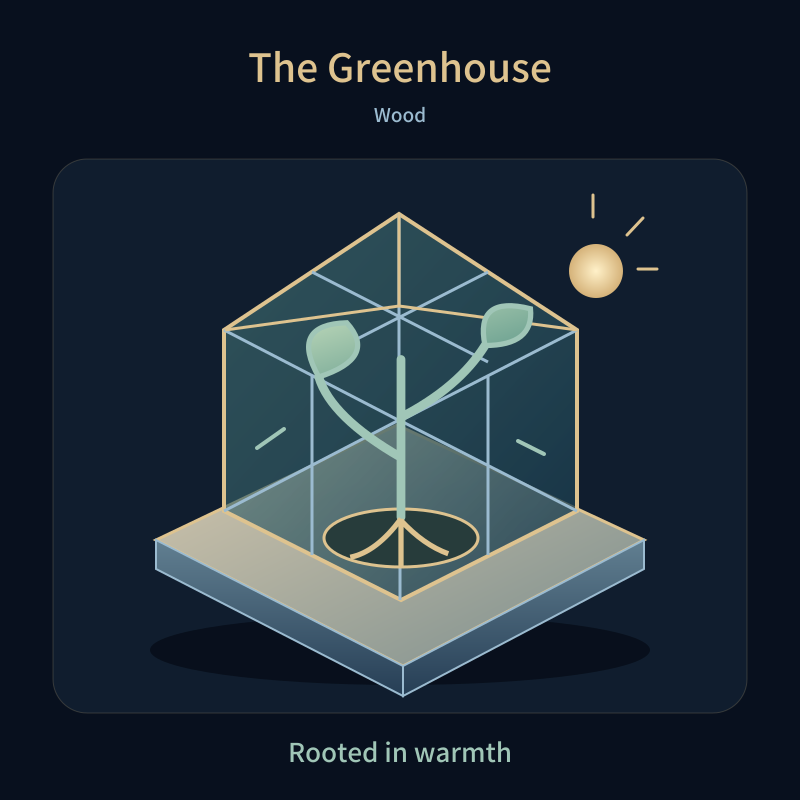
The GreenhouseWood
One who took root in a loved soil
Ample · Expressive · Wood
A capacity to trust · Ease in relationships · A deep-seated optimism
Unpracticed in lean seasons — hardship arrives unfamiliar · Trust is the default, so betrayal falls from a greater height
When no one is there to protect you, can you protect yourself?
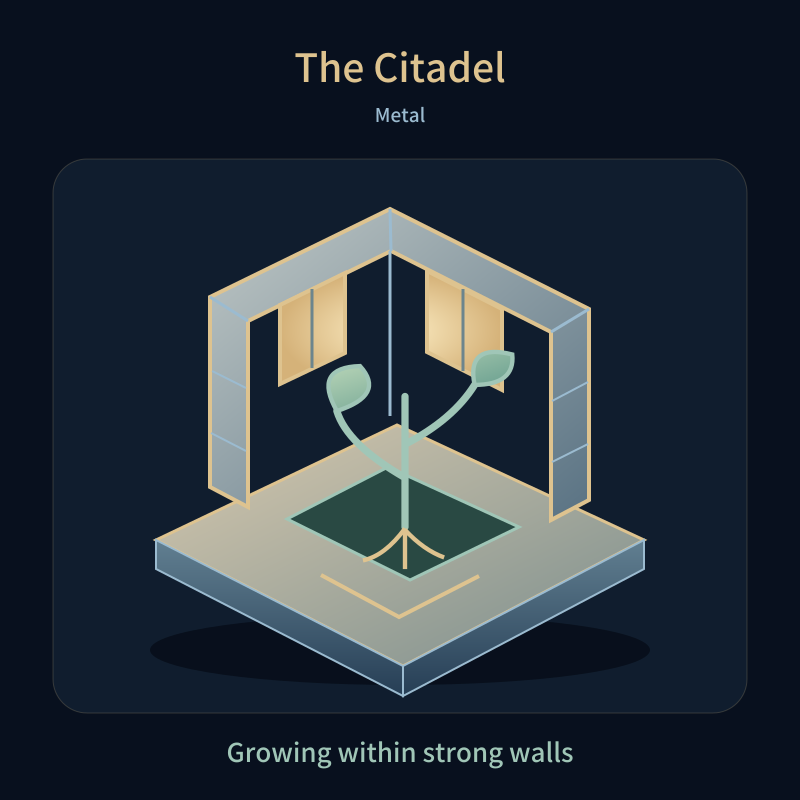
The CitadelMetal
One who grew up alone behind solid walls
Ample · Reserved · Metal
Strong self-control · Exceptional follow-through · Cool judgment
A longing for and fear of intimacy · An emptiness when nothing is achieved
Even with nothing achieved, do you believe you are enough?
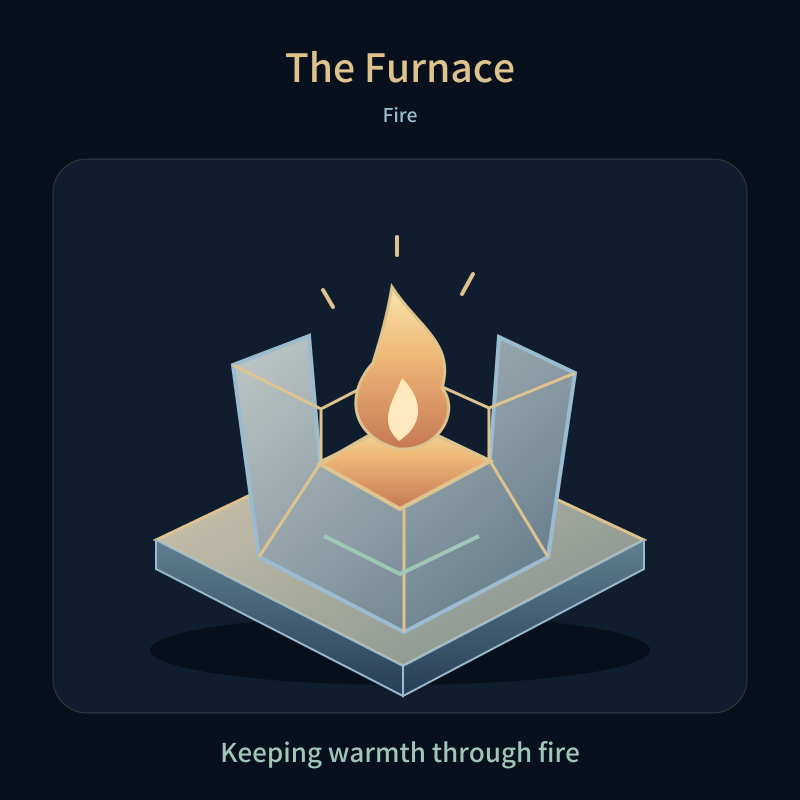
The FurnaceFire
One who kept warmth even inside the fire
Lean · Expressive · Fire
A vitality that won't go out · Deep empathy · A care for small things
An over-attachment to stability · Discomfort in receiving · An excess of responsibility
When did you last carry nothing at all?
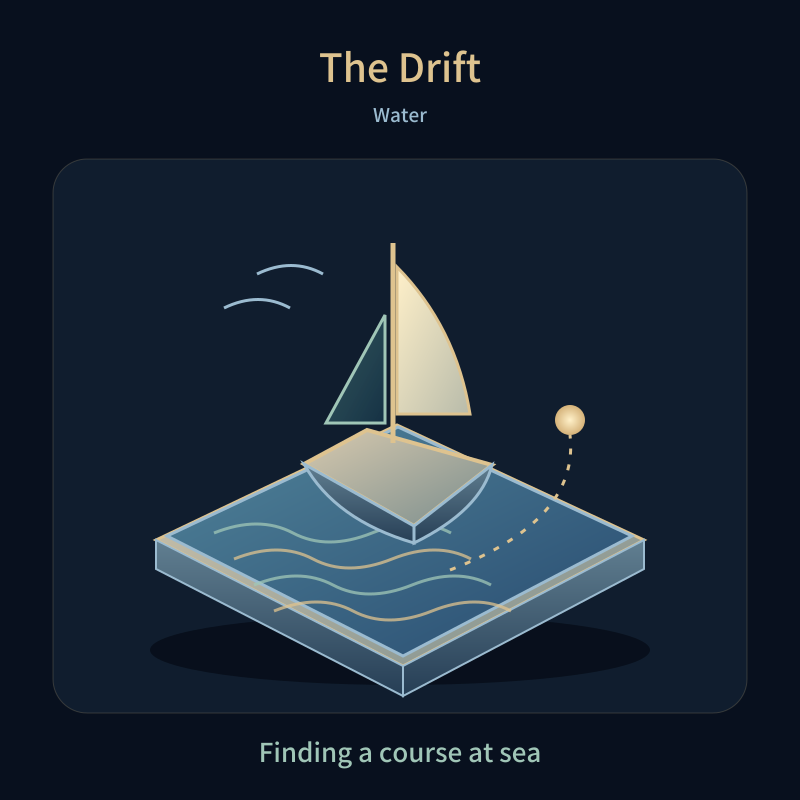
The DriftWater
One who learned to swim alone in an empty sea
Lean · Reserved · Water
Complete self-reliance · Remarkable adaptability · A self unshaken by others' eyes
Difficulty with trust itself · Unable to ask for help · Avoidance of deep bonds
Have you ever felt it was okay for someone to simply be beside you?
How it is read
Seven questions ask about the air of your childhood home, money, living space and emotional support; each answer adds to or subtracts from the material and the emotional axis. The coordinates of the two axes decide the primary type, but when one axis sits near the middle it is read as a mixed type blended with the neighbouring corner, and when both sit in the middle as a balanced grain that belongs to no corner. Scores are normalised to a ±3 range per axis for readability, and the scoring itself is performed consistently on the server.
A mirror, not a verdict
The language of environment typology is narrative, not authority. It takes inspiration from what developmental psychology observes about the warmth of caregiving and a family’s material circumstances — it is not a validated diagnostic instrument. Rather than boxing a person in, it reflects where today’s strengths and wounds came from, and every type carries strengths, wounds and one line of shadow question: the question that grows you most when you face it.
The ground within the five-thread narrative
Environment is one of the threads by which a person is read. The destiny given by heaven (the Four Pillars), the world grown up in (environment), the character formed within it (CORE-8) and the faces of bonds and roles overlap into a single narrative.
The other two frames
Frequently asked
- What is environment typology?
- A frame that reads the world you grew up in through two axes — material circumstances (ample ↔ lean) and emotional warmth (expressive ↔ reserved) — as four types: greenhouse, citadel, furnace and drift. It is not a ranking of better and worse but a reflection of which strengths and which wounds each type carries together.
- How is an environment type decided?
- Answer seven questions about the air of your childhood, money, living space and emotional support, and continuous coordinates are set on the material and emotional axes. When both axes sit near the middle it reads as a ‘balanced grain’ belonging to no corner; when only one does, as a ‘mixed type’ blended with the neighbouring corner. The scoring is performed consistently on the server.
- How does this differ from inborn character or the Four Pillars?
- The Four Pillars (destiny) is the design heaven gave at the moment of birth; the environment type is the grain the world you grew up in carved on top of it. Neither replaces the other — together with character (CORE-8), bonds and roles they overlap as several threads into one person.
- Does an environment type change?
- The facts of childhood are past and cannot be changed. But the grip those facts have on who you are now is not fixed — a type is not a verdict but a starting point for noticing what you would like to rewrite.
Answer seven questions and we will read your environment type, woven together with your chart and your character into one narrative.
Environment typology is a narrative tool for self-understanding, not a psychological or medical diagnosis.
Seven questions place your environment — then it is woven with your chart and character into one narrative.
Begin my narrative →